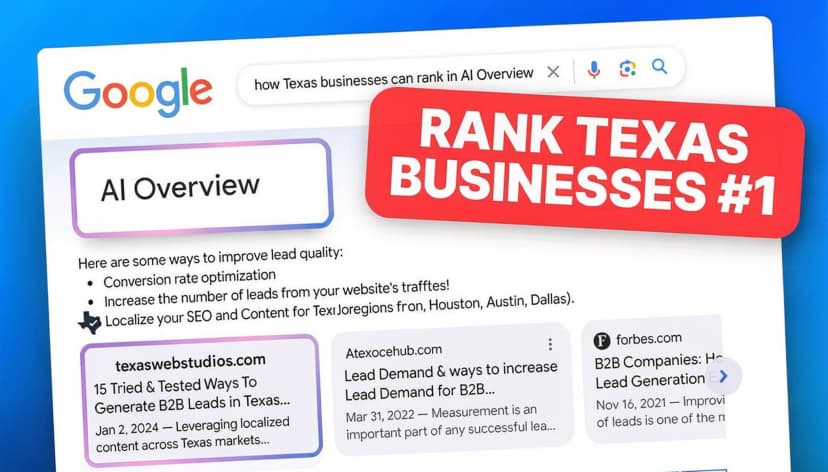
Quick answer: To improve your website SEO, target the questions your customers actually search for, write helpful pages with clear titles and headings, make your site fast and mobile-friendly, fix technical errors, link related pages together and earn links from trusted websites. SEO is a long-term process: most sites see meaningful movement within a few months, not days.
What Is SEO and Why Does It Matter?
SEO (search engine optimization) is the practice of making your website easier for search engines to find and for people to trust, so it appears when customers search for what you offer. Search engines such as Google update their systems regularly, but the core goal stays the same: show people the most helpful, reliable result. Today that includes AI Overviews and AI Mode, which use the same indexed pages. Google says there are no special extra requirements for them beyond good SEO.
What Are the 12 Best Ways to Improve Website SEO?
1. Research the keywords and questions your customers use
Start with what people type or ask. Use Google Search Console, Google Keyword Planner, "People also ask" and customer questions. Choose one main topic for each page and match the search intent: informational, comparison or ready-to-buy.
2. Write clear title tags and meta descriptions
The title should tell searchers exactly what the page offers, include the main keyword and stay under about 60 characters so it is not cut off. A good meta description is a short summary of the page, around 150 to 160 characters, that makes people want to click. Google may rewrite either one, so make sure the page itself delivers what they promise.
3. Structure content with headings
Use one H1, then H2s and H3s in logical order. Phrase headings like real questions and put a direct answer first. This helps readers, featured snippets and AI tools understand your page.
4. Create helpful, original content
Answer questions completely, show real experience, include examples and update facts regularly. Avoid thin, copied or repetitive pages.
5. Target featured snippets and AI answers
Give a short, direct answer of about 30 to 50 words under a question heading, then expand with lists, steps and detail.
6. Add internal links
Link related pages with descriptive anchor text so people and crawlers can find them. Every important page should be reachable from other pages.
7. Optimize images
Compress images, use WebP or AVIF where possible, write descriptive file names and alt text and set width and height to avoid layout shifts.
8. Improve page speed and Core Web Vitals
Google's targets are Largest Contentful Paint within 2.5 seconds, Interaction to Next Paint under 200 milliseconds and Cumulative Layout Shift under 0.1. Use fast hosting, caching, a CDN and fewer heavy scripts. See how website speed affects AI search rankings.
9. Be mobile-first
Google indexes the mobile version of your site. Make sure mobile pages have full content and are easy to tap and read.
10. Build quality backlinks
Links from relevant, trusted sites act as votes of confidence. Earn them with useful guides, original data, partnerships, local press and directory listings. Do not buy links or join link schemes, which can cause penalties.
11. Fix technical SEO issues
Make sure pages are crawlable and indexed, the sitemap is clean, canonicals are correct, there are no broken links and HTTPS is on. Read our technical SEO basics.
12. Strengthen local SEO
If you serve a local area, complete your Google Business Profile, keep your name, address and phone number consistent and collect reviews. See our guide to local SEO for small businesses in Texas.
Which Tools Help You Audit and Improve SEO?
- Google Search Console: indexing, queries, clicks and Core Web Vitals
- Google Analytics: traffic and conversions
- PageSpeed Insights and Lighthouse: speed and quality checks
- Screaming Frog: crawl your site for errors
- Semrush or Ahrefs: keyword research, competitor analysis and backlink data
Tools show problems, but you still need judgment to decide what matters.
How Can You Improve SEO Without Hiring an Expert?
- Verify your site in Google Search Console and fix indexing errors.
- Rewrite titles and meta descriptions on your top pages.
- Add a clear answer and a short FAQ to your most important service pages.
- Compress large images and remove unused plugins.
- Link your related pages together.
- Ask happy customers for reviews and complete your Business Profile.
Complex projects such as migrations, large technical fixes and competitive link building often need specialist help.
What Are the Most Important SEO Ranking Factors in 2026?
Google does not publish a ranked list, but the practical priorities are consistent: helpful, original content that matches search intent, a crawlable and fast site with good page experience, relevant links and trust signals such as expertise, reviews and clear business details.
How Long Does SEO Take to Work?
New pages and fixes can start to show in weeks, but competitive terms usually take several months of steady work. Track progress with Search Console, review monthly and keep improving.
Conclusion
Better SEO comes from helpful content, a fast and well-built site and trust earned over time. Texas Web Studios offers search engine optimization and website content services for Texas businesses. Contact us to improve your rankings.